
When people compare painting estimates, they usually compare the paint. Is it the good stuff? How many coats? That matters, but it's the smaller half of the job. On a well-run interior repaint, prep is the majority of the hours on site — and it's the part that decides whether the finish still looks right in five years.
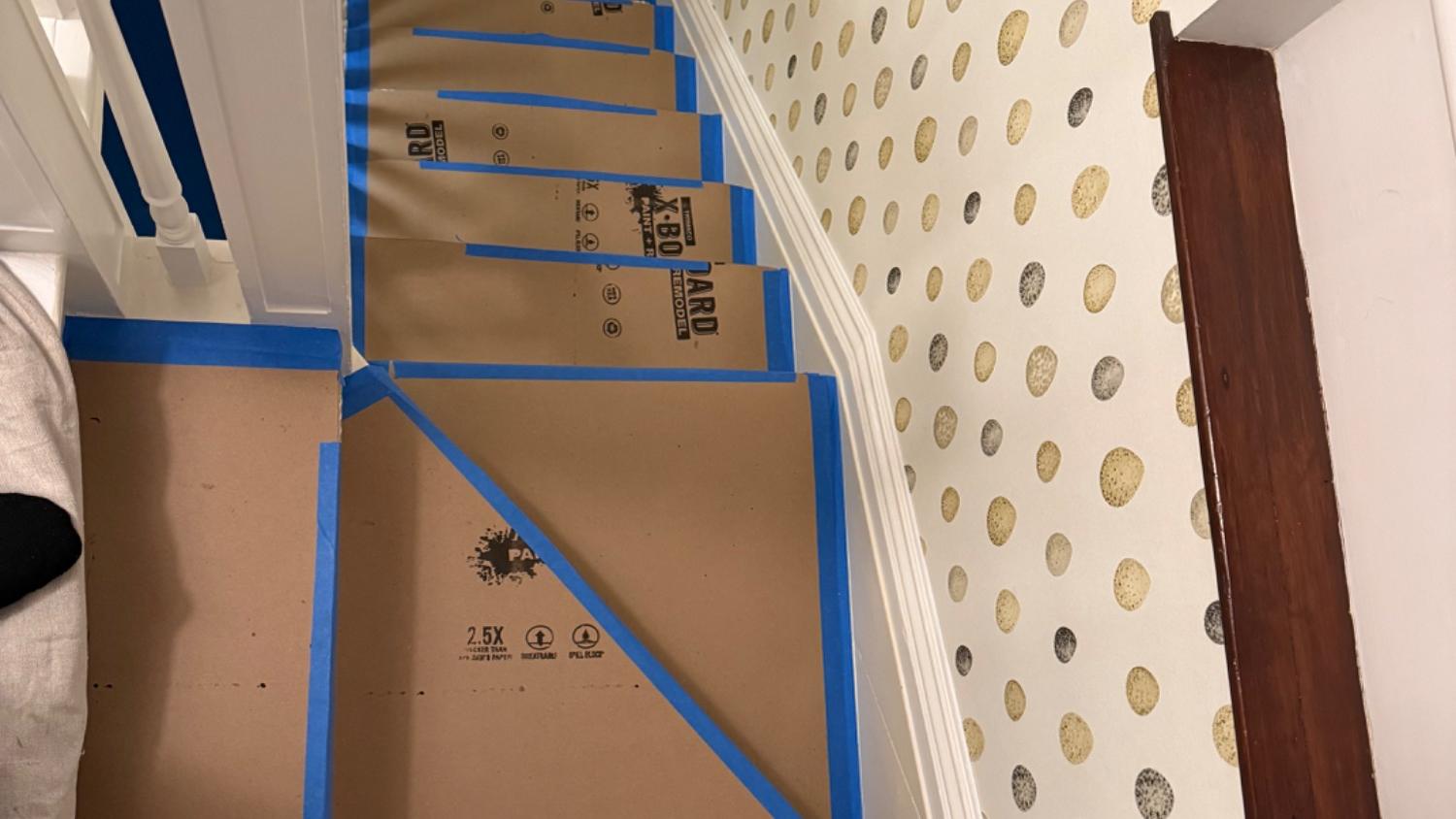
Prep starts with protection. Furniture is moved to the center of the room and covered, floors are papered or covered with drop cloths, outlets and fixtures are masked, and hardware comes off the doors. It sounds basic, but it's where corners get cut on a cheap job, and it's why you end up finding paint on the hinges and the hardwood.
Then the walls get fixed. Every nail hole, crack and dent is filled and sanded flush. Bigger damage gets a proper drywall patch, not a smear of compound. Old wallpaper is stripped and the glue is washed off — painting over wallpaper glue is what causes the finish to bubble and peel later. Glossy trim is sanded to dull it so the new paint has something to grip.
Priming is the step people most want to skip, and it's the one that shows the fastest. Patched areas absorb paint differently from the wall around them, so without primer they 'flash' — you can see every repair as a dull spot when the light hits the wall sideways. Bare wood, new drywall and dark-to-light color changes all need primer too. We prime what needs priming, not the whole house by default and not nothing.
Caulking matters just as much on trim. Every gap between baseboard and wall, casing and wall, and crown and ceiling gets a bead of paintable caulk. That's the difference between trim that looks like it grew there and trim with a dark shadow line along every edge.
Only after all of that does the paint go on: two full coats, cut in by hand at the ceiling and trim, rolled evenly so there's no lap marks. Good paint over good prep is what lasts. Good paint over bad prep peels off the bad prep.
Outside, the same logic applies with higher stakes. A Long Island exterior — especially near the water — takes salt, sun and freeze-thaw every year. Washing off the mildew and chalk, scraping and sanding everything that's loose, priming bare wood, and caulking every open joint is what gets a paint job to ten years instead of three. The paint on top is the same either way.
So when you compare estimates, ask about prep, not just paint. How is the room protected? What gets patched, and how? What gets primed? Is trim caulked? A painter who can answer those in detail is a painter whose work will still look good when it's time to sell the house.
Want a straight answer for your own home? Call Soto Painting Corporation at (934) 500-9125 — we're available 24/7 — for a free estimate anywhere on Long Island, from Brentwood to Montauk.